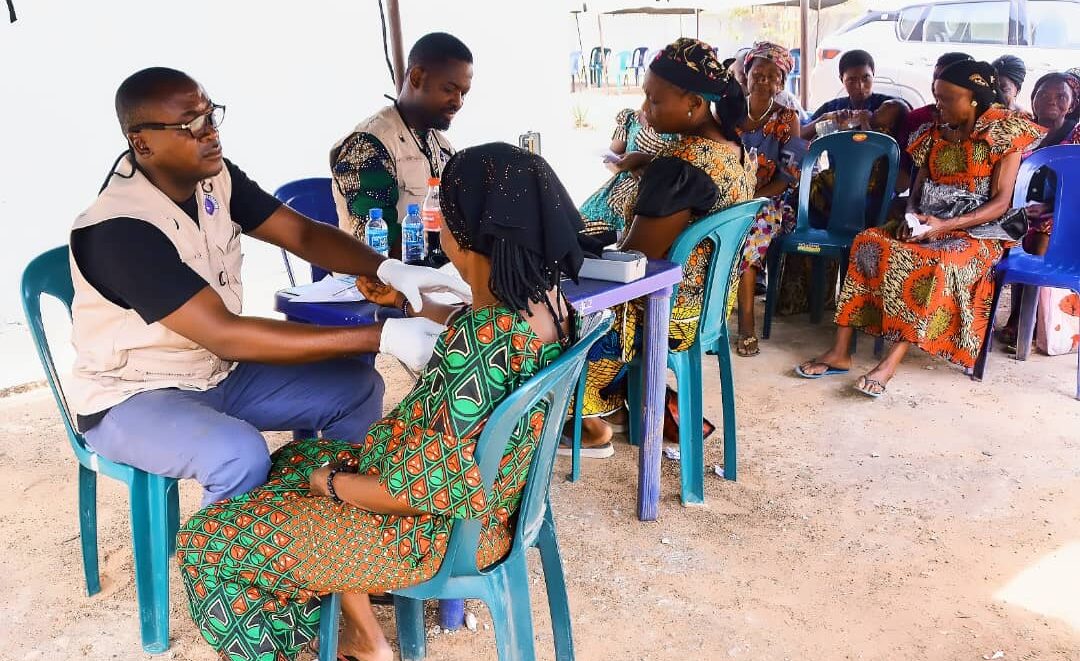
On 6th February 2026, the National Association of Seadogs (NAS) Medical Mission conducted its Quarter Two PWC Medical Mission, delivering free clinical consultations, laboratory services, pharmaceutical care, health education, and referral services to underserved residents of Owo Town, Nkanu East LGA in Enugu State. The mission served as a comprehensive primary healthcare outreach addressing both acute and chronic health needs within the community.
Service Reach and Demographics
A total of 136 beneficiaries were registered, with 126 completing full clinical consultations. The age distribution reflected a predominantly adult and elderly population:
40% aged 36–60 years
30.% aged 61 years and above
Only 13% were under 18 years
The average age was 47 years, with beneficiaries ranging from 2 months to 91 years. Women constituted 60% of beneficiaries, while men accounted for 40%. This gender distribution
reflects higher female health-seeking behaviour and highlights opportunities to strengthen male engagement in preventive care.
Epidemiological Profile
Analysis of 126 consultation records revealed a clear dual burden of communicable and non-communicable diseases (NCDs).
Infectious Diseases
Malaria: 55 cases (44% of patients)
Upper Respiratory Tract Infection: 8 cases
Urinary Tract Infection: 6 cases
Helminthiasis: 4 cases
When diagnoses were disaggregated, infectious conditions accounted for approximately 45% of all recorded diagnoses, with malaria alone representing nearly one-third of the total disease burden.
Non-Communicable Diseases
Hypertension: 28 cases (22.2% of patients)
Arthritis and related conditions: 9 cases
Peptic Ulcer Disease: 8 cases
Additional cases included diabetes, osteoarthritis, and goitre. Non-communicable diseases represented approximately 30% of all diagnoses, strongly correlating
with the adult-dominant age structure of beneficiaries.
Comorbidity and Clinical Complexity
The mission identified a highly complex patient population:
91% of patients had two or more diagnoses
33% had three or more concurrent conditions
The most frequent comorbidity was Malaria and Hypertension (8 cases)
Approximately 15% of malaria patients also had hypertension
This pattern indicates that beneficiaries were presenting with layered health challenges involving both infectious and chronic disease processes. The data confirm that the mission functioned as an integrated primary healthcare intervention rather than a vertical one.
disease campaign.
Ophthalmological Services
A total of 31 ophthalmology cases were identified:
50% refractive errors
20% cataracts
Smaller numbers of glaucoma and conjunctivitis
The referral rate for ophthalmology cases was 23.3%, with referrals largely driven by cataract and
glaucoma management. All referrals during the mission were from ophthalmology, indicating strong
on-site management capacity for infectious and chronic medical conditions.
Pharmaceutical Utilization
Key pharmaceutical insights include the following:
Antimalarials accounted for 23% of all dispensed medications
Antibiotics represented 17.5%, warranting attention to stewardship
Anti-hypertensive use is closely aligned with hypertension diagnosis rates
Gastrointestinal medication reflected NSAID use and GI symptom burden
The high average number of medications per patient reflects the significant comorbidity load.
Strategic Implications
The mission revealed a community experiencing concurrent infectious and chronic disease pressures.
Key epidemiological indicators include:
43.7% malaria prevalence
22.2% hypertension prevalence
91% comorbidity rate
These findings underscore the necessity of an integrated service delivery model combining the following:
Acute infectious disease management
Routine NCD screening and treatment
Preventive health education
Structured referral and follow-up systems
Recommendations
To sustain and expand impact, the report recommends:
Short-Term:
Mandatory BP and malaria screening
Improved documentation systems
Strengthened referral tracking
Medium-Term:
Community malaria prevention campaigns
Antibiotic stewardship initiatives
Expanded ophthalmology partnerships
Long-Term:
Transition to structured periodic PHC camps
Establish community hypertension programs
Institutionalise digital health data systems
Strengthen referral and continuity-of-care frameworks
Conclusion
The NAS Medical Mission, Q2 Medical Outreach, successfully delivered comprehensive healthcare services to a multi-morbid, adult-dominant population. The mission addressed not only acute infectious diseases but also significant chronic conditions, confirming the presence of a sustained dual disease burden in the community. The data strongly support transitioning future missions toward an integrated primary healthcare model capable of addressing layered health needs while strengthening community-level preventive and chronic disease management systems.
Section B: Complete Report of NAS Q2 2025/2026 PWC Onboard Sancta Bermuda Deck