24-05-2026
NATIONAL EBOLA VIRUS DISEASE (EVD) PUBLIC HEALTH ADVISORY
By the National Association of Seadogs (NAS) Medical Mission
In Support of the Federal Ministry of Health Nigeria, the Nigeria Centre for Disease Control and Prevention (NCDC), the World Health Organization (WHO), and International Public Health Partners
The National Association of Seadogs through the NAS Medical Mission hereby issues this nationwide public health advisory as part of its corporate social responsibility and commitment to safeguarding the health and wellbeing of Nigerians.
Nigeria currently has no confirmed case of Ebola Virus Disease (EVD). However, due to the ongoing outbreak of the Bundibugyo strain of Ebola in the Democratic Republic of the Congo and imported cases reported in Uganda, heightened vigilance and preparedness remain critically important.
The Nigeria Centre for Disease Control and Prevention (NCDC), in collaboration with the Federal Ministry of Health, Port Health Services, and the Federal Airports Authority of Nigeria (FAAN), has activated enhanced surveillance systems across international airports, seaports, and land borders to prevent importation of the disease into Nigeria.
As of 21 May 2026, the World Health Organization confirmed that the current outbreak in Central and East Africa has resulted in hundreds of suspected cases and significant fatalities, leading WHO to declare the outbreak of a Public Health Emergency of International Concern (PHEIC).
CURRENT INTERNATIONAL SITUATION
The ongoing outbreak involves the Bundibugyo strain of Ebola virus, for which there is presently no licensed vaccine or specific antiviral treatment. Current WHO reports indicate:
- Over 700 suspected cases have been reported in the Democratic Republic of the Congo.
- Confirmed cases have also been identified in Uganda through cross-border transmission.
- Healthcare workers have been infected in affected regions, emphasizing the importance of strict infection prevention measures.
- WHO has classified the regional risk as high due to population movement and porous borders.
NATIONAL PREPAREDNESS AND SURVEILLANCE MEASURES
The Federal Government of Nigeria, through the Federal Ministry of Health and NCDC, has intensified national preparedness measures in alignment with WHO and international CDC protocols.
Current measures include:
- Mandatory thermal screening and temperature checks at international entry points.
- Health declaration and travel history screening for travellers arriving from affected countries.
- Activation of holding and isolation facilities at airports and border points.
- Strengthening of rapid response teams and emergency surveillance networks nationwide.
- Enhanced coordination between state ministries of health, teaching hospitals, private healthcare facilities, and public health laboratories.
The NAS Medical Mission strongly commends these proactive efforts and urges all institutions and citizens to cooperate fully with national public health authorities.
UNDERSTANDING EBOLA VIRUS DISEASE (EVD)
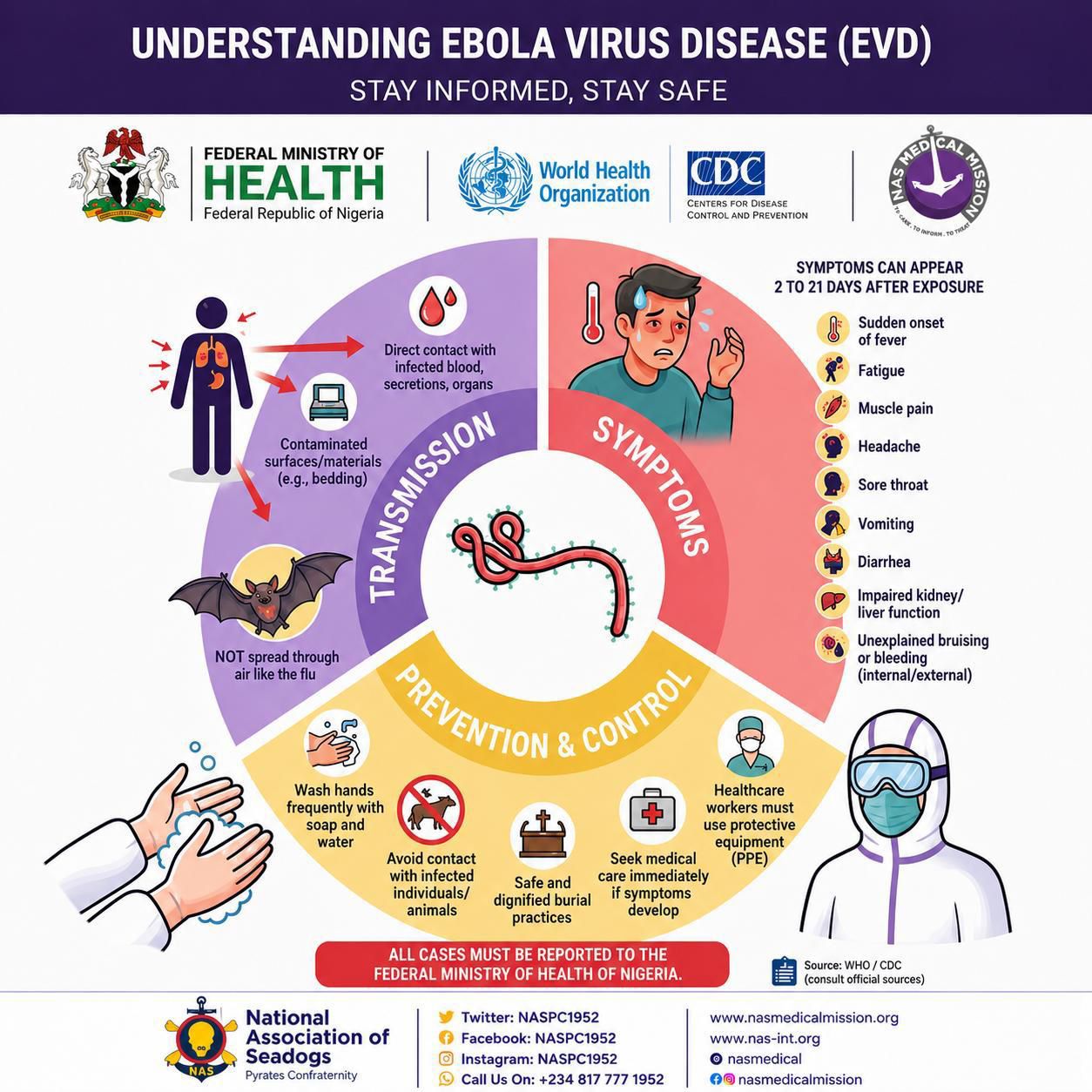
Ebola Virus Disease is a severe and often fatal viral haemorrhagic illness transmitted through:
- Direct contact with blood or bodily fluids of infected persons.
- Contact with contaminated surfaces, clothing, bedding, needles, or medical equipment.
- Contact with infected animals including bats and non-human primates.
Symptoms usually develop between 2 to 21 days after exposure.
KEY WARNING SIGNS AND SYMPTOMS
Members of the public should immediately seek medical attention if any of the following occur, especially after recent international travel or contact with a sick person:
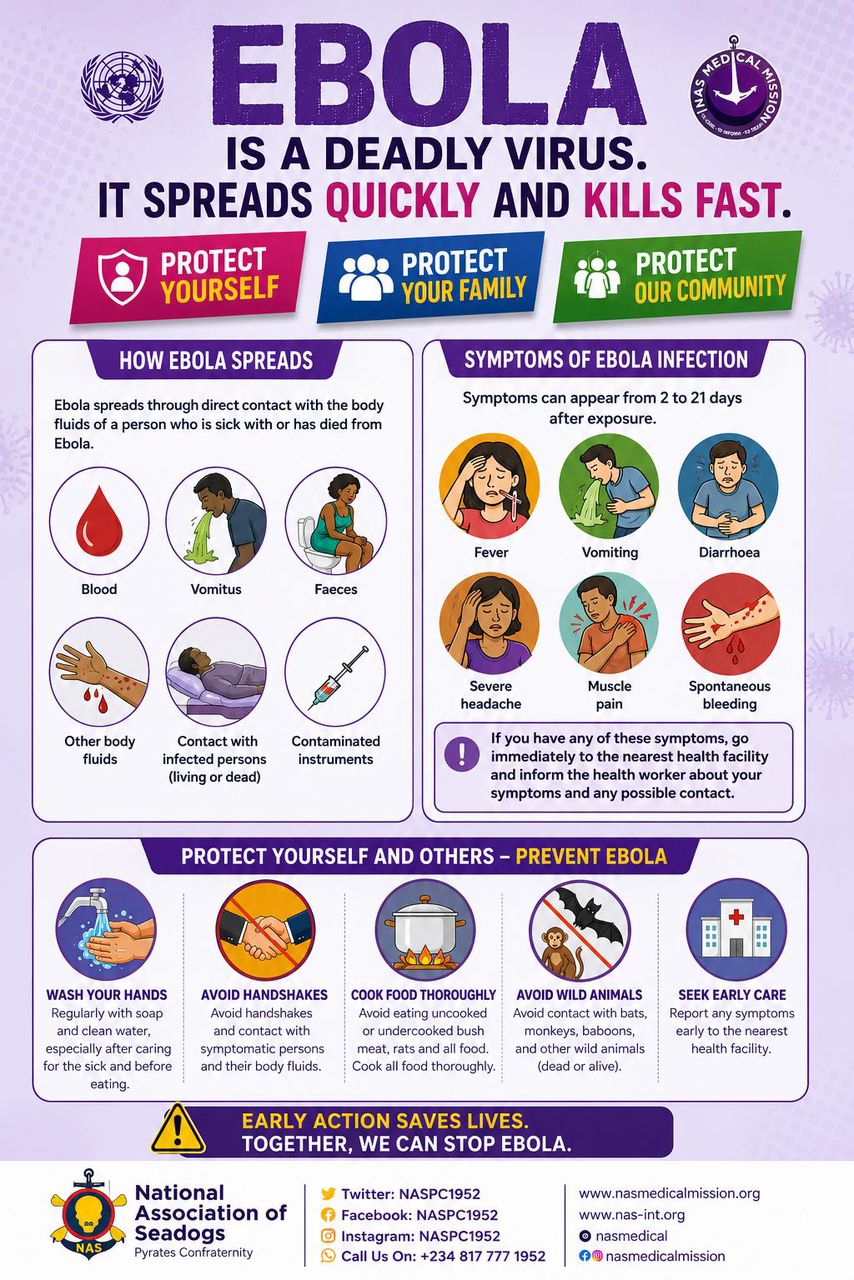
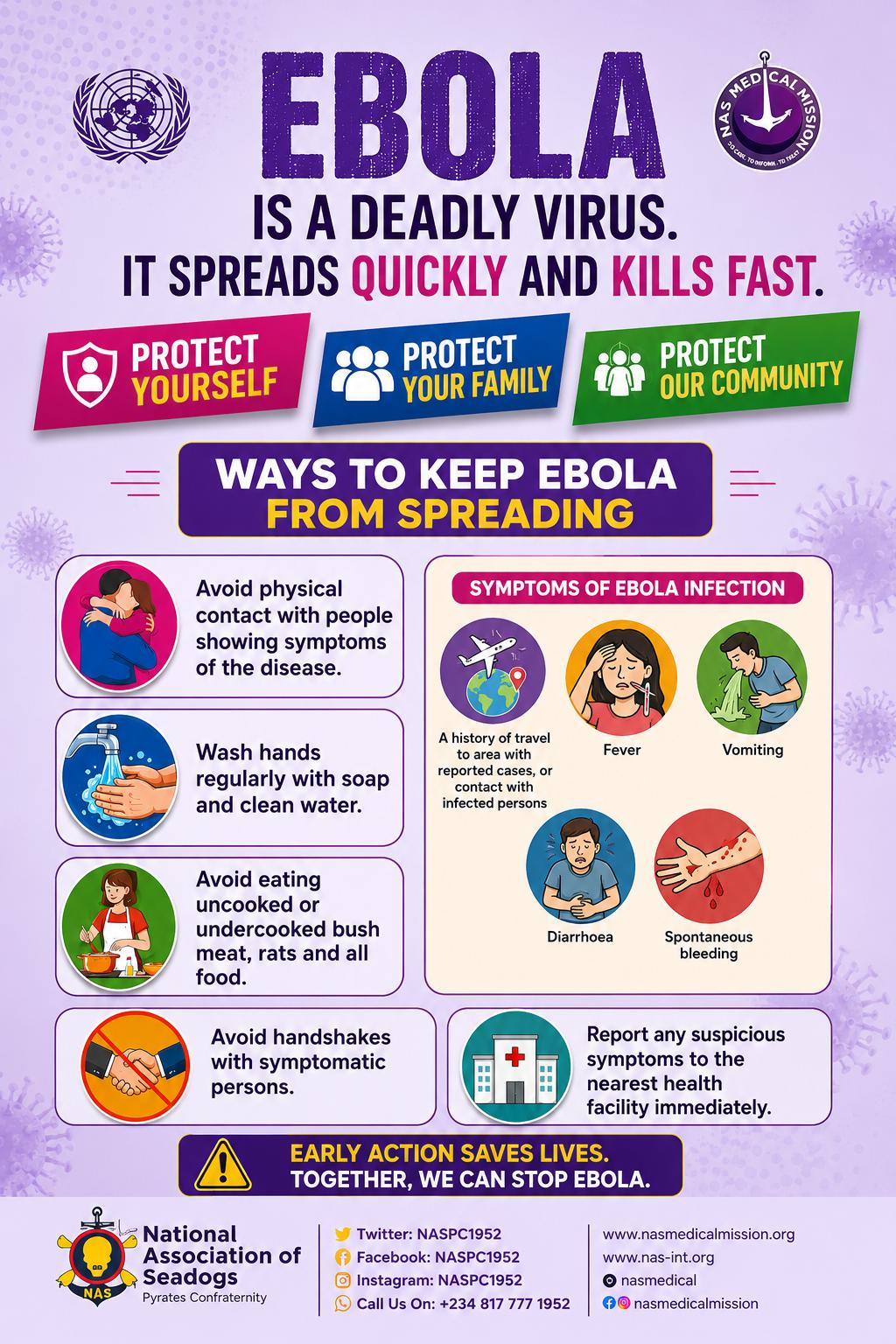
- Sudden high fever
- Severe headache
- Muscle and joint pains
- Extreme weakness and fatigue
- Vomiting
- Diarrhoea
- Abdominal pain
- Unexplained bleeding from gums, nose, stool, urine, or skin
Early detection and supportive treatment significantly improve survival.
PUBLIC HEALTH ADVISORY TO ALL NIGERIANS
The NAS Medical Mission urges all Nigerians to remain calm, vigilant, and responsible.
EVERY CITIZEN SHOULD:
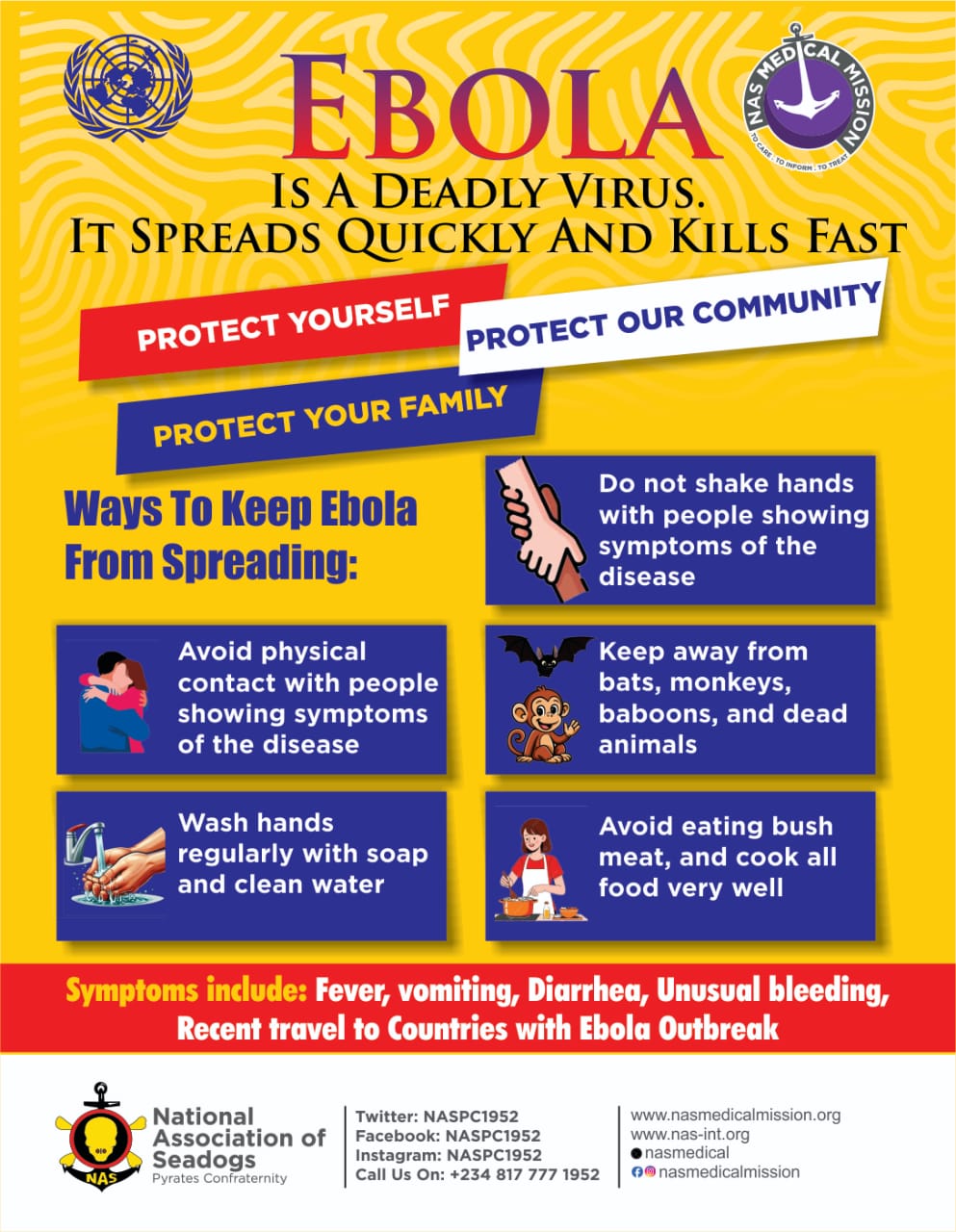
- Wash hands frequently with soap and running water.
- Use alcohol-based hand sanitizers regularly.
- Avoid direct contact with blood or bodily fluids of sick individuals.
- Avoid self-medication and concealment of symptoms.
- Avoid spreading false rumours or panic on social media.
- Report suspected cases immediately to health authorities.
- Avoid consumption of raw or undercooked bushmeat.
- Exercise caution with travel to affected regions in Central and East Africa.
ADVISORY TO HEALTHCARE WORKERS AND HEALTH FACILITIES
The NAS Medical Mission recognizes the sacrifices of healthcare professionals and calls for strict compliance with Infection Prevention and Control (IPC) measures.
ALL HEALTHCARE PERSONNEL SHOULD:
- Maintain a high index of suspicion in patients with fever and travel history.
- Strictly adhere to WHO and NCDC infection prevention protocols.
- Consistently use appropriate Personal Protective Equipment (PPE).
- Immediately isolate suspected cases.
- Promptly notify local Disease Surveillance and Notification Officers (DSNOs) and the NCDC.
- Avoid unnecessary exposure during handling of suspected infectious materials or corpses.
Healthcare institutions are advised to strengthen triage systems, emergency preparedness drills, and staff education programs.
REPORTING AND EMERGENCY RESPONSE
Any person experiencing symptoms compatible with Ebola Virus Disease, especially after recent travel or exposure history, should immediately contact health authorities.
REPORT SUSPECTED CASES THROUGH:
- The NCDC Toll-Free Emergency Number: 6232
- Nearest government hospital or public health authority
- State Ministry of Health emergency response teams
Prompt reporting saves lives and helps prevent community transmission.
CALL FOR NATIONAL UNITY AND COLLABORATION
The NAS Medical Mission emphasizes that successful prevention and containment of Ebola Virus Disease require collective national action and close collaboration among:
- The Federal Ministry of Health
- The Nigeria Centre for Disease Control and Prevention
- State Ministries of Health
- Healthcare institutions
- Community leaders
- Religious organizations
- Civil society groups
- International partners including the World Health Organization and CDC agencies
Nigeria successfully overcame the Ebola outbreak of 2014 through rapid coordination, disciplined public health action, and national unity. The same vigilance and cooperation remain essential today.
FINAL MESSAGE FROM NAS MEDICAL MISSION
The National Association of Seadogs (NAS) Medical Mission reassures Nigerians that preparedness, early reporting, responsible public behavior, and adherence to established public health protocols remain the strongest defense against Ebola Virus Disease.
We encourage all citizens to stay informed only through verified information from the NCDC Official Website and the World Health Organization (WHO)
Together, through vigilance, collaboration, and responsible action, Nigeria can remain safe and protected.
NAS Medical Mission “To Care. To Inform. To Treat.”
Dr Chiazor Odoemene Dr Joseph Oteri
NAS Medical Pyrate. NAS Capoon